
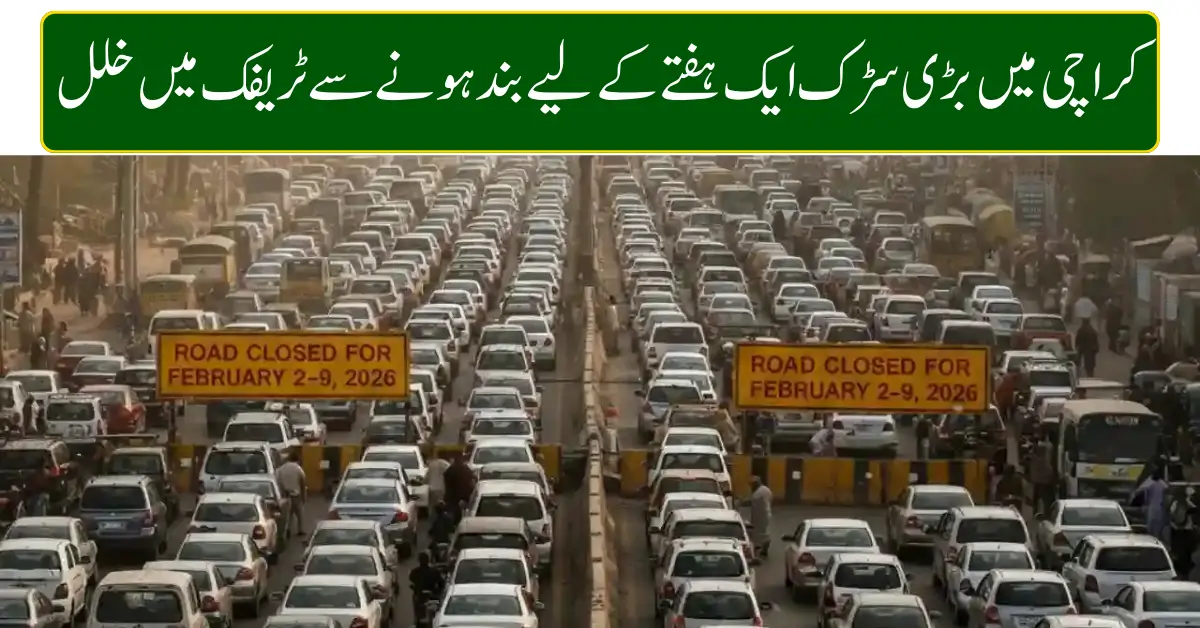
Karachi is once again under pressure as traffic disruption intensifies following the closure of a major road for one full week. The decision, announced by city authorities in early 2026, has significantly affected daily mobility across Pakistan’s largest metropolis, triggering congestion on alternative routes and slowing down economic activity.
With millions of vehicles already competing for limited road space, the temporary shutdown has highlighted long-standing challenges related to urban planning, infrastructure maintenance, and traffic management in Karachi.
Why a Major Road in Karachi Has Been Closed
According to official statements, the road closure is part of an urgent infrastructure intervention that could no longer be delayed.
Key reasons behind the closure include:
- Severe surface damage caused by heavy traffic
- Underground sewerage and drainage repairs
- Structural weaknesses increase accident risks
- Long-term rehabilitation under city development plans
Authorities stated that allowing traffic during this phase could have endangered commuters and worsened the condition of the road.
Duration and Scope of the Road Closure
The closure is scheduled to remain in effect for seven consecutive days, subject to weather and on-ground conditions.
Officials confirmed:
- Complete traffic restriction on the affected stretch
- No partial opening during peak hours
- Continuous work schedules to meet the deadline
The road is considered a key arterial corridor, making its closure particularly impactful for commuters traveling between commercial districts, residential zones, and industrial areas.
Areas Experiencing Heavy Traffic Disruption
The effects of the closure are not limited to one road alone. Several surrounding localities are facing spillover congestion.
Traffic pressure has been reported in:
- Nearby main arteries connecting business hubs
- Service roads are used as makeshift detours
- Residential streets converted into shortcuts
- Commercial areas with high vehicle turnover
Morning and evening rush hours have been especially challenging, with travel times doubling in some areas.
Impact on Daily Commuters
Office Workers and Students
Thousands of employees and students have been forced to adjust their routines.
Common complaints include:
- Leaving home much earlier than usual
- Increased lateness despite extra travel time
- Physical fatigue and mental stress
Educational institutions have also reported delayed arrivals, particularly for students relying on public transport.
Public Transport and Ride Services Under Pressure
The closure has placed added strain on Karachi’s already stretched transport system.
Challenges faced by transport operators:
- Longer routes and detours
- Increased fuel consumption
- Delays in trip completion
- Fare disputes in some cases
Ride-hailing services and rickshaw operators have cited reduced trip efficiency and rising operational costs.
Business and Trade Impact Across the City
Karachi’s commercial activity has also felt the effects of the disruption.
Businesses near the closed road report:
- Reduced customer visits
- Delays in goods deliveries
- Higher logistics expenses
- Missed deadlines for supply chains
For a city that serves as Pakistan’s economic engine, even short-term traffic disruption translates into noticeable financial losses.
Traffic Police Diversion Plan and On-Ground Measures
To manage the situation, Karachi Traffic Police have rolled out a citywide diversion strategy.
Measures implemented include:
- Deployment of additional traffic wardens
- Temporary traffic signals at key intersections
- Barricades and warning signage
- Coordination with city administration departments
Motorists have been urged to strictly follow instructions and avoid unnecessary travel through high-pressure corridors.
Alternative Routes and Travel Advice
Authorities have announced multiple alternative routes to bypass the closed road, though congestion remains high.
Tips for commuters:
- Use navigation apps with real-time traffic data
- Avoid peak hours where possible
- Opt for public transport or carpooling
- Plan routes in advance
- Follow official traffic updates
Despite diversions, traffic flow remains slower than usual across several zones.
Public Reaction and Social Media Response
Public response has been divided. While some citizens acknowledge the importance of infrastructure repair, others have expressed frustration.
Common public concerns include:
- Short notice before closure
- Poor coordination between departments
- Lack of efficient mass transit alternatives
- Absence of night-time construction schedules
On social platforms, residents have urged authorities to complete the work within the promised timeline and improve future planning.
Economic and Environmental Consequences
Economic Impact
Traffic congestion leads to:
- Loss of productive work hours
- Increased fuel costs
- Delays in freight movement
Urban planners warn that repeated disruptions could weaken business confidence if not managed better.
Environmental Impact
Extended traffic jams contribute to:
- Higher air pollution levels
- Increased carbon emissions
- Noise pollution in residential neighborhoods
Environmental experts stress the need for smarter traffic flow management to reduce the city’s ecological burden.
What Authorities Are Saying
City officials have reiterated that the closure is temporary but essential.
According to authorities:
- Public safety is the top priority
- The repaired road will offer smoother travel
- Long-term durability will reduce future disruptions
They have requested patience and cooperation from citizens during the repair period.
How Long Will the Disruption Last?
Officials estimate that the road will reopen after one week, provided:
- Weather conditions remain stable
- No unforeseen technical complications arise
- Work progresses as scheduled
Regular progress monitoring has reportedly been put in place to avoid delays.
Practical Tips for Karachi Residents During the Closure
To minimize inconvenience, commuters are advised to:
- Leave earlier than usual
- Avoid unnecessary trips
- Stay informed via official traffic police channels
- Choose flexible travel hours
- Keep alternate routes in mind
Small adjustments in travel habits can significantly reduce daily stress.
Long-Term Solutions for Karachi’s Traffic Challenges
Experts emphasize that temporary fixes are not enough.
Suggested long-term measures include:
- Expansion of mass transit systems
- Regular road maintenance planning
- Better coordination between utility agencies
- Smart traffic signaling systems
- Improved public transport reliability
Without structural reforms, Karachi is likely to face recurring traffic crises.
Conclusion
The traffic disruption in Karachi caused by the closure of a major road for one week has once again exposed the city’s fragile transport ecosystem. While the inconvenience is undeniable, authorities maintain that the repairs are crucial for long-term safety and road quality.
For now, cooperation, careful planning, and timely updates remain the best tools for commuters. At the same time, this episode reinforces the urgent need for sustainable traffic and infrastructure planning to prevent repeated disruptions in the future.
FAQs
Why is a major road in Karachi closed?
Due to urgent infrastructure repair, sewerage work, and safety concerns.
How long will the closure last?
Officials estimate approximately one week.
Are alternative routes available?
Yes, but congestion is expected during peak hours.
Will public transport be affected?
Yes, delays and route changes are likely.
How can commuters avoid delays?
Plan, leave early, and follow official traffic updates.