
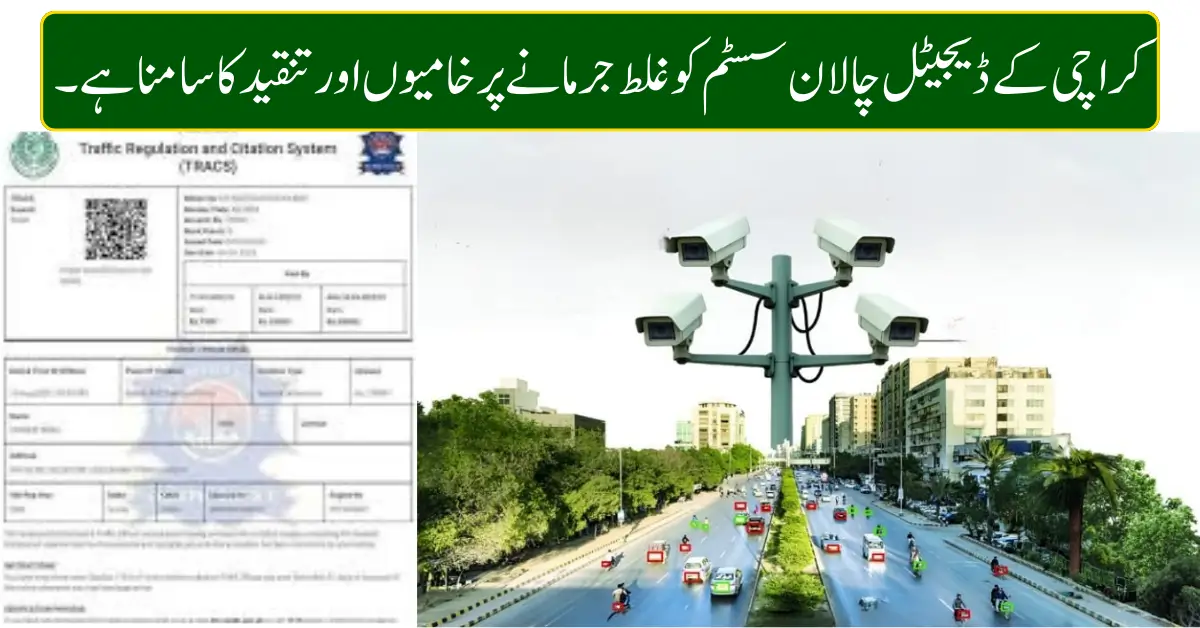
The Repeated Flaws Hit Karachi Traffic Police E-Challan System narrative continues to dominate public discussion as motorists across the city report persistent technical and administrative problems. What began as a step toward digital transformation and transparent traffic enforcement has gradually turned into a source of frustration for thousands of citizens.
Introduced to modernise traffic management under the Karachi Traffic Police and Sindh Police framework, the e-challan system was meant to curb corruption, reduce manual interaction, and improve road discipline. Yet, in 2026, repeated complaints suggest that the system is still struggling to deliver on its original promise.
This article takes a closer look at why repeated flaws hit Karachi Traffic Police’s e-Challan system, how these issues affect citizens, and what reforms are urgently needed.
Understanding the Karachi Traffic Police E-Challan System
The e-challan system relies on:
- Surveillance and ANPR cameras
- Handheld devices used by traffic wardens
- Centralised digital databases
- Integration with vehicle registration records
Its primary objectives include:
- Eliminating manual challans
- Creating digital records of violations
- Increasing transparency
- Improving road safety
Despite these goals, operational weaknesses continue to surface.
Incorrect and Unverified Challans: A Growing Concern
One of the most frequent complaints is the issuance of wrong e-challans.
Motorists report receiving fines even when:
- Their vehicle was not present at the location
- The car or bike was parked legally
- The alleged violation occurred at a different time
- Someone else’s vehicle was involved
These errors force citizens to prove their innocence, reversing the basic principle of fairness.
Camera and Number Plate Recognition Failures
The system heavily depends on Automatic Number Plate Recognition (ANPR) technology. However, accuracy remains inconsistent.
Common technical problems include:
- Blurred or low-resolution images
- Poor lighting conditions
- Dirty or damaged number plates
- Incorrect camera angles
As a result, partial or wrong plate numbers are captured, leading to challans being issued to unrelated vehicle owners.
Delayed Updates After Payment
Another major reason repeated flaws hit Karachi Traffic Police’s e-challan system is the delay in updating payment records.
Many motorists report that:
- Challans still show unpaid after the settlement
- Vehicle records remain blocked
- They face repeated stops despite having paid
This reflects weak synchronisation between traffic police databases, banks, and digital payment gateways.
Weak Complaint and Appeal Mechanism
A modern digital system should provide a smooth and transparent appeal process. Unfortunately, citizens often face:
- No clear online appeal portal
- Slow or no responses from helplines
- Confusing cancellation procedures
- Requirement to visit offices in person
These hurdles defeat the purpose of digital governance.
Impact on Law-Abiding Citizens
Instead of encouraging compliance, repeated system errors have created:
- Mental stress
- Financial burden
- Loss of trust in authorities
- Increased resentment
Many responsible drivers feel punished despite following traffic rules.
Legal and Administrative Gaps
Legal experts argue that the current structure lacks safeguards for due process.
Concerns include:
- No independent verification before issuing fines
- Presumption of guilt
- Limited right to a timely appeal
Without proper checks, digital enforcement risks becoming arbitrary.
Coordination Failures Between Departments
The e-challan ecosystem depends on data sharing between:
- Karachi Traffic Police
- Sindh Excise and Taxation Department
- NADRA-linked vehicle databases
- Banks and payment service providers
Poor coordination results in outdated ownership records and mismatched data, fueling further errors.
Public Backlash and Social Media Pressure
Platforms like Facebook, X (Twitter), and YouTube are filled with screenshots and videos showing incorrect challans and unresolved complaints.
Trending themes include:
- Wrong fines
- Harassment at checkpoints
- Revenue-driven enforcement
This backlash has seriously damaged institutional credibility.
How Other Cities Handle Digital Challans Better
Cities such as Lahore and Islamabad, along with international examples, have improved outcomes by focusing on:
- High-quality camera infrastructure
- Multi-layer verification
- Time-bound appeal systems
- Citizen awareness campaigns
Karachi’s issue lies more in execution than in concept.
Reforms Needed to Fix the System
To address why repeated flaws hit Karachi Traffic Police’s e-challan system, authorities must consider:
Technology Upgrades
- High-resolution cameras
- Improved ANPR software
Human Verification Layer
- Manual review before final challan issuance
Centralised Appeal Portal
- Online appeals with fixed timelines
Inter-Departmental Integration
- Real-time data sharing
Independent Oversight
- Regular system audits
Government Responsibility in 2026
Digital systems must serve citizens, not burden them. Transparent reporting, public feedback mechanisms, and accountability of officials are essential for restoring confidence.
Conclusion
The Repeated Flaws Hit Karachi Traffic Police’s E-Challan System highlight a deeper challenge in Pakistan’s digital governance journey. While the intention behind e-challan was positive, technical weaknesses, poor coordination, and weak grievance mechanisms continue to undermine its effectiveness.
With sincere reforms, modern technology, and a citizen-centric approach, the system can still evolve into a reliable tool for traffic management. Without these changes, public trust will continue to erode.