
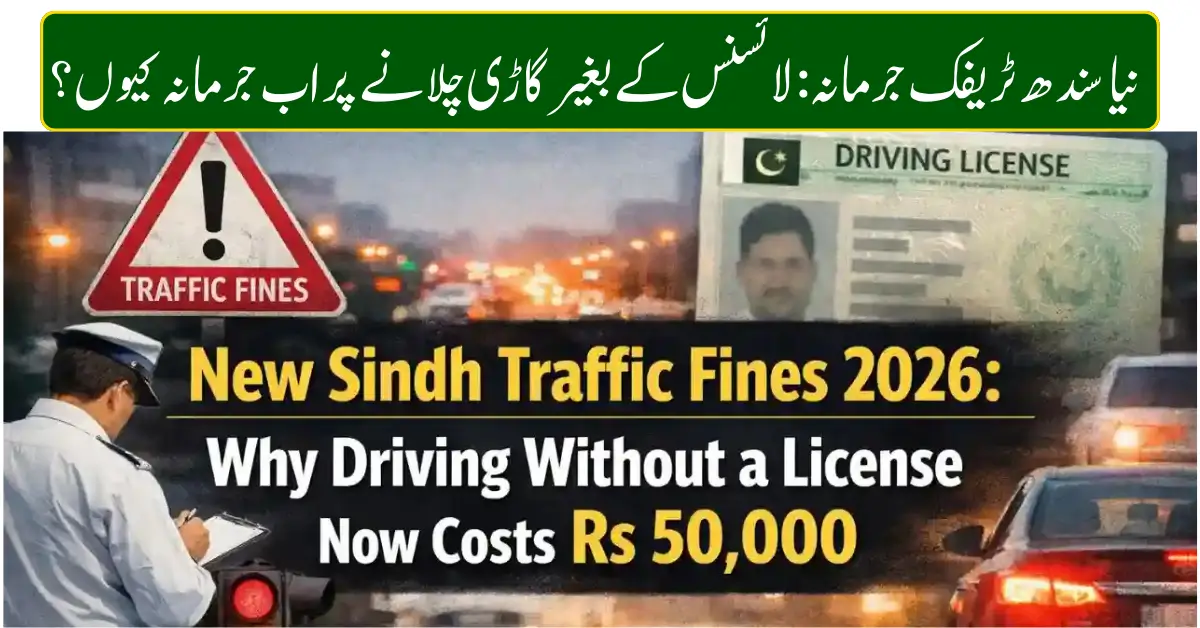
Sindh has entered a new era of road safety enforcement. With the introduction of revised traffic penalties for 2026, the provincial government has announced some of the toughest fines ever implemented in Pakistan’s history. The most talked-about change is the Rs 50,000 fine for driving without a valid license, a move that has quickly become a major topic of discussion in Karachi, Hyderabad, Sukkur, Larkana, and other cities.
Officials say these reforms are not meant to generate revenue but to reduce fatal accidents, improve driving behavior, and bring discipline to Sindh’s roads. For years, unlicensed and untrained drivers have contributed to traffic chaos. The new framework aims to reverse that trend.
This article explains what has changed, why the fine is so high, who will be affected, and how drivers can stay compliant in 2026.
Sindh Traffic Law Reforms 2026 – What Has Changed
The updated regulations fall under amendments to provincial traffic rules, giving traffic police stronger legal authority and significantly increasing penalties for major violations.
Key goals behind these reforms include:
- Cutting down road accident fatalities
- Ensuring only trained drivers operate vehicles
- Eliminating fake and expired licenses
- Strengthening digital enforcement systems
- Creating long-term road discipline
Authorities believe that low fines in previous years encouraged repeated violations, making enforcement ineffective.
Why Driving Without a License Now Costs Rs 50,000
Growing Road Accident Crisis
Traffic departments across Sindh report that a large proportion of deadly accidents involve unlicensed or underage drivers. Many of these drivers lack a basic understanding of:
- Traffic signals and signs
- Speed limits and lane usage
- Pedestrian crossings
- Right-of-way rules
Raising the fine to Rs 50,000 is intended to act as a strong deterrent.
Ending the Culture of Casual Violations
Previously, driving without a license often resulted in a small challan that many motorists simply paid and ignored.
Common practices included:
- Driving for years without applying for a license
- Using fake licenses
- Continuing to drive despite expired documents
The new fine makes such behavior financially unbearable.
Moving Toward Global Road Safety Standards
In many countries, unlicensed driving leads to heavy fines, vehicle impoundment, and even jail time. Sindh’s updated penalty structure is designed to bring local enforcement closer to international road safety norms.
Who Does the Rs 50,000 Fine Apply To
The penalty applies to all categories of drivers, including:
- Motorcycle riders
- Car and jeep drivers
- Commercial vehicle operators
- Ride-hailing drivers
- Delivery and courier riders
Even if a driver claims the license is “at home” or “under process,” the challan can still be issued if the license cannot be verified digitally.
Other Major Traffic Fines Introduced in Sindh 2026
Alongside unlicensed driving, many other violations now carry heavier penalties.
Updated Penalty Overview
| Violation | New Fine Range |
|---|---|
| Not wearing a seatbelt | Rs 50,000 |
| Underage driving | Rs 25,000 |
| Over-speeding | Rs 10,000 – Rs 25,000 |
| Signal violation | Rs 5,000 – Rs 10,000 |
| Reckless or dangerous driving | Rs 20,000 |
| Mobile phone use while driving | Rs 5,000 |
| Riding without helmet | Rs 5,000 |
| Riding without hela met | Rs 3,000 |
Repeat offenders may also face vehicle impoundment and court proceedings.
Technology Behind the New Enforcement System
Sindh has expanded the use of digital tools to ensure transparency and accuracy:
- E-challan system
- Smart traffic cameras
- Centralized driving license databases
- Real-time CNIC and license verification
Traffic police can now instantly check whether a driver holds a valid license, making excuses ineffective.
How to Avoid the Rs 50,000 Fine
Staying compliant is simple and far cheaper than paying heavy penalties.
Drivers should:
- Apply for a learner’s permit before driving
- Pass the official driving test
- Carry a valid physical or digital license
- Renew expired licenses on time
- Avoid fake agents or shortcuts
Obtaining a legal license costs only a fraction of the new fine.
Public Reaction Across Sindh
Public opinion remains divided.
Supporters believe:
- Strict fines are necessary to save lives
- Roads will become safer
- Underage driving will decrease
Critics argue:
- Fines are too high for low-income citizens
- Awareness campaigns should accompany enforcement
Despite concerns, most road safety experts agree that strong enforcement is long overdue.
Early Impact on Traffic Behavior
Initial observations suggest:
- Increase in license applications
- Fewer minors riding motorcycles
- Improved helmet and seatbelt usage
- More cautious driving habits
If consistent enforcement continues, accident rates are expected to decline.
Future Plans for Traffic Management in Sindh
Authorities are exploring additional reforms, including:
- Mandatory driving education programs
- Digital driving history records
- Black points system on licenses
- Stricter penalties for repeat offenders
These steps aim to build a long-term culture of responsible driving.
Conclusion
The Rs 50,000 fine for driving without a license marks a historic shift in Sindh’s traffic enforcement strategy. While the penalty may feel severe, it reflects the seriousness of the road safety crisis facing the province.
The message is clear: driving is a responsibility, not a privilege. A valid license is no longer optional—it is essential.
Safer roads, fewer accidents, and better traffic flow will ultimately benefit everyone.
FAQs – Sindh Traffic Fines 2026
Why is the fine so high?
To discourage unlicensed driving and reduce accidents.
Does this apply to motorcycles?
Yes, motorcycle riders are included.
What if my license is expired?
An expired license is treated as invalid.
Can police seize my vehicle?
Yes, in serious or repeat cases.
Is a digital license acceptable?
Yes, if it is verifiable through official systems.