
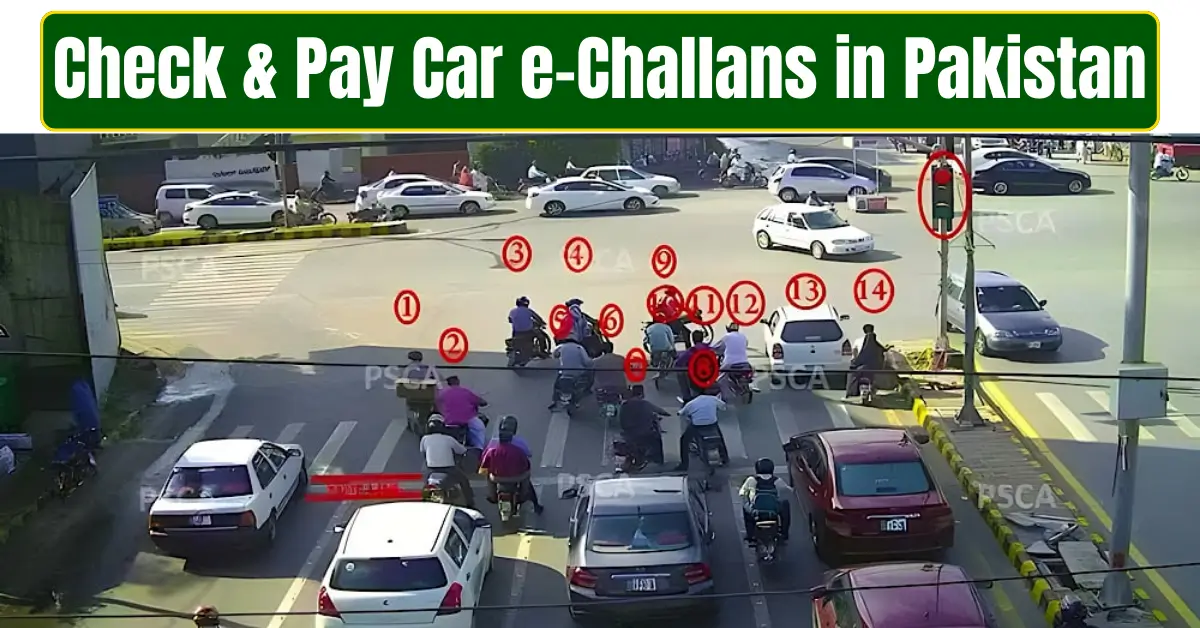
For millions of overseas Pakistanis, owning a car back home is common. Parents, siblings, or relatives often use these vehicles daily. What many people living abroad don’t realise is that traffic violations are now issued digitally through automated surveillance systems. No paper ticket is placed on the windscreen, and no physical notice is delivered to your overseas address.
This means your vehicle in Pakistan can quietly accumulate e-Challans (electronic traffic fines) without you ever knowing. Over time, unpaid challans can lead to registration blocks, problems in selling or transferring the vehicle, and even legal notices.
This 2026 guide explains, step by step, how overseas Pakistanis can check and pay e-Challans online, confirm payment status, and keep their vehicles fully compliant with Pakistan’s traffic laws.
Understanding the e-Challan System in Pakistan
An e-Challan is an electronic traffic fine generated through digital monitoring networks rather than roadside stops. Modern systems use:
- Speed cameras
- Red-light cameras
- Safe City surveillance cameras
- Automatic Number Plate Recognition (ANPR)
The challan is issued against the vehicle registration number, not the person driving.
These systems are managed by authorities such as:
- Punjab Police Traffic Wing
- Islamabad Traffic Police
- Sindh Traffic Police
- Provincial Excise & Taxation Departments
Because the system is automated, violations are recorded instantly and stored in centralised databases.
Why Overseas Pakistanis Must Monitor e-Challans
Many people assume fines only matter if they personally drive the car. In reality, the vehicle itself carries the record.
Important reasons to stay alert:
- Family members or drivers may commit violations
- Cameras issue challans automatically
- SMS alerts often go to Pakistani numbers only
- Unpaid fines can block vehicle transfer
- Registration renewal may be stopped
- Accumulated challans increase the payable amount
Regular monitoring prevents unpleasant surprises later.
Cities with Active Digital Traffic Enforcement
e-Challan systems are operational in most major cities, including:
- Lahore
- Islamabad
- Rawalpindi
- Karachi
- Faisalabad
- Multan
- Gujranwala
- Peshawar
- Quetta
More cities are being added each year as Safe City projects expand.
How Overseas Pakistanis Can Check e-Challans Online
Method 1: Using Vehicle Registration Number
This is the most commonly used method.
Steps:
- Open the official e-Challan portal of the relevant city or province
- Enter your vehicle registration number
- Submit the request
- View all pending and paid challans
These websites are accessible worldwide, including from the UAE, Saudi Arabia, the UK, the USA, Canada, and Europe.
Method 2: Using CNIC (Where Available)
Some provincial systems allow searching through the owner’s CNIC.
Steps:
- Enter CNIC number
- Verify details
- View challans linked to all vehicles under that CNIC
This is helpful if you own more than one vehicle.
Method 3: Through a Family Member in Pakistan
If you face technical issues:
- Ask a trusted family member to visit a traffic police facilitation centre
- Provide vehicle registration details
- Request a printed challan record
They can send you photos of the record.
How Overseas Pakistanis Can Pay e-Challans from Abroad
Option 1: Pakistani Internet Banking
If you maintain a bank account in Pakistan:
- Log in to internet banking
- Go to Bill Payments / Government Payments
- Select Traffic e-Challan
- Enter the challan number
- Confirm payment
Commonly supported banks include:
- HBL
- UBL
- MCB
- Meezan Bank
- Bank Alfalah
Option 2: Mobile Banking & Wallet Apps
Popular apps in Pakistan allow challan payments:
- Easypaisa
- JazzCash
- Bank mobile apps
Payment can be made using:
- Challan number
- Vehicle registration number
This is one of the fastest methods.
Option 3: Ask Family Members to Pay
If you don’t use Pakistani banking services:
- Send the challan details to the family
- They can pay through:
- ATM
- Bank counter
- Mobile wallet
- Ask them to share the receipt
Option 4: Bank Branch Payment
A family member can:
- Print the e-Challan
- Visit a designated bank branch
- Pay over the counter
- Send you the receipt
How to Confirm e-Challan Payment Status
After payment:
- Recheck the challan on the same portal
- Status should change to Paid or Cleared
Update time:
- Usually within 24 hours
- Sometimes up to 72 hours
Always save:
- Screenshot of payment
- Bank or app receipt
Common Traffic Violations Issued Digitally
Overseas Pakistanis should be aware of frequent offences:
- Over-speeding
- Signal jumping
- Lane violation
- Illegal parking
- No seat belt
- Motorcycle without a helmet
- Using a mobile phone while driving
- Vehicle fitness or number plate issues
Consequences of Ignoring e-Challans
Unpaid challans can lead to:
- Vehicle registration blockage
- Problems in selling or transferring the car
- Token tax renewal issues
- Biometric verification failure
- Legal notices in serious cases
Long-term neglect can result in large accumulated fines.
Tips to Avoid Future e-Challans
- Educate family members about traffic laws
- Share speed limits for major roads
- Do not allow unlicensed drivers
- Ensure the vehicle number plate is standard and readable
- Check the challan status every 2–3 months
- Keep vehicle documents updated
Can an Overseas Pakistani Contest an e-Challan?
Yes. If you believe a challan is incorrect:
- Contact the relevant traffic police helpline
- Provide the challan number and vehicle details
- A family member may need to visit the traffic office
- Evidence, such as a camera image or incorrect plate recognition, can be reviewed
Future of Digital Traffic Enforcement in Pakistan
Pakistan is moving toward:
- AI-based traffic cameras
- Nationwide ANPR integration
- Linking excise, traffic, and NADRA databases
- Unified national e-Challan portal
This means digital enforcement will become stricter and more accurate in the coming years.
FAQs – Overseas Pakistanis & e-Challans
Can I check e-Challans while living abroad?
Yes, official portals are accessible worldwide.
Do e-Challans expire?
No, they remain active until paid.
Can I pay without a Pakistani bank account?
Yes, through family members or mobile wallets.
Will unpaid challans affect vehicle sales?
Yes, transfer can be blocked.
Are online payments secure?
Yes, government portals and bank apps are secure.
Conclusion
For overseas Pakistanis, managing vehicles back home is now a digital responsibility. The e-Challan system works automatically and does not rely on physical notices. Regularly checking and paying challans online protects you from legal trouble, financial penalties, and future complications.
Staying proactive ensures your vehicle remains fully compliant with Pakistan’s traffic laws—no matter where in the world you live.