
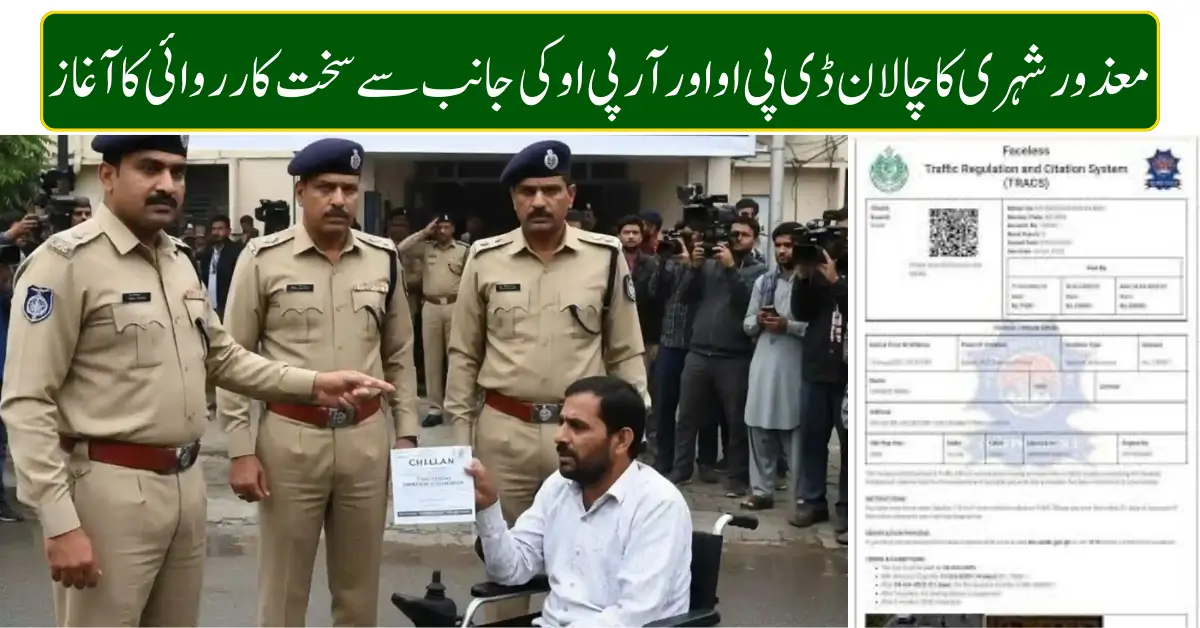
The challan of a disabled citizen triggering strict action by the DPO and RPO has become a defining incident in Pakistan’s recent law-enforcement accountability landscape. What began as a routine traffic stop quickly turned into a nationwide discussion on citizen rights, police conduct, and the protection of persons with disabilities.
In 2026, this case stands as a reminder that public institutions are under constant scrutiny—and that swift corrective action can still restore trust when mistakes occur.
What Happened: A Brief Overview of the Incident
The incident unfolded during a routine traffic check when a physically disabled citizen was stopped by traffic police personnel. Despite visible signs of disability and the presentation of relevant documents, the citizen was issued a traffic challan.
Within hours, the matter gained attention after:
- Bystanders highlighted the issue
- Images and details circulated on social media
- Journalists and digital news platforms picked up the story
Public reaction was immediate and intense, raising serious questions about procedural negligence and lack of sensitivity.
Why the Challan Raised Serious Concerns
The challan was widely viewed as unjustified due to several factors:
- The individual had limited mobility
- The vehicle was reportedly approved for special use
- Disability-related exemptions were ignored
- No senior verification was conducted before issuing the fine
This was not merely a traffic violation dispute—it was seen as a failure to respect human dignity.
Legal Protections for Disabled Citizens in Pakistan
Pakistan’s legal and constitutional framework provides special safeguards for persons with disabilities. These protections are reinforced through:
- Provincial traffic regulations
- Disability rights policies
- Government-issued disability certification systems
- NADRA-linked identity verification
Disabled citizens are entitled to:
- Reasonable exemptions in mobility-related cases
- Respectful and non-discriminatory treatment
- Assistance rather than punishment during enforcement checks
Issuing a challan without acknowledging these protections amounts to misuse of authority.
Public Outrage and Media Pressure
Once the incident surfaced online, public sentiment shifted rapidly. The story spread across:
- Social media platforms
- Digital news websites
- Television talk shows
- Citizen journalism pages
Public demands focused on:
- Immediate cancellation of the challan
- Accountability of involved officers
- Institutional reforms in traffic policing
- Sensitivity training for enforcement staff
This collective pressure played a crucial role in accelerating official action.
Swift Intervention by DPO and RPO
Following widespread attention, senior police leadership intervened without delay. Both the District Police Officer (DPO) and Regional Police Officer (RPO) took notice of the matter and ordered an urgent review.
Key Actions Taken
- Immediate cancellation of the challan
- Suspension of the traffic official involved
- Launch of a departmental inquiry
- Issuance of formal warnings to supervisory staff
- Review of standard operating procedures
These steps sent a strong internal message that negligence toward vulnerable citizens will not be tolerated.
Official Position from Police Authorities
In their statements, police leadership emphasized that:
- The challan violated established procedures
- Officers must verify facts before taking action
- Disabled citizens require empathy, not intimidation
- Misconduct damages institutional credibility
The RPO further stressed that policing is a public service, not a tool for harassment, and that accountability applies at every level.
Why This Case Matters for Law Enforcement
This incident highlights the growing importance of institutional accountability in Pakistan. When senior officials act decisively, it reflects:
- Commitment to justice
- Respect for marginalized communities
- Awareness of public oversight
- Willingness to correct internal failures
Such responses help rebuild confidence between citizens and law enforcement agencies.
Everyday Challenges Faced by Disabled Citizens
Despite legal protections, disabled individuals in Pakistan continue to face obstacles such as:
- Limited awareness among officials
- Inconsistent implementation of exemptions
- Physical accessibility barriers
- Insensitive behavior during enforcement interactions
Traffic enforcement remains one of the most common areas where misunderstandings and misuse of authority occur.
The Need for Better Training and Awareness
Experts and rights advocates argue that meaningful reform requires:
- Disability awareness training for traffic police
- Clear written guidelines on exemptions
- Human rights education within police academies
- Periodic refresher courses for field officers
Without structured training, isolated incidents risk becoming recurring problems.
Role of Social Media in Accountability
This case also demonstrates how digital platforms now function as tools for justice. Without public visibility:
- The challan might not have been reviewed
- Senior officers may not have intervened
- The affected citizen could have remained unheard
Social media has become a bridge between citizens and institutions—especially for those with limited access to formal complaint mechanisms.
Ethical and Legal Lessons from the Case
Several key lessons emerge:
- Verification must precede enforcement
- Vulnerable citizens deserve protection, not suspicion
- Ethical conduct is central to policing
- Authority must be exercised with responsibility
- Public servants are accountable to the people
These principles are essential for modern governance.
Impact on Police Image and Public Trust
Initially, the incident harmed the public image of traffic police. However, the rapid response by the DPO and RPO helped:
- Contain reputational damage
- Demonstrate internal accountability
- Encourage citizens to report misconduct
- Reinforce confidence in corrective mechanisms
Swift action often matters as much as the final outcome.
What This Incident Could Change Going Forward
If followed by institutional reforms, this case may lead to:
- Policy updates regarding disabled citizens
- Stronger monitoring of traffic enforcement
- Improved complaint redressal systems
- Increased public awareness of legal rights
- Faster disciplinary responses to misconduct
Handled correctly, it can become a turning point rather than just a controversy.
Conclusion
The challan of a disabled citizen triggering strict action by the DPO and RPO reflects both a troubling lapse and a reassuring correction. While the initial act exposed gaps in sensitivity and procedure, the swift response by senior police leadership restored some faith in the system.
In 2026, this case stands as a powerful reminder that accountability, empathy, and public vigilance are essential for justice—and that institutions must evolve to serve all citizens with dignity.