
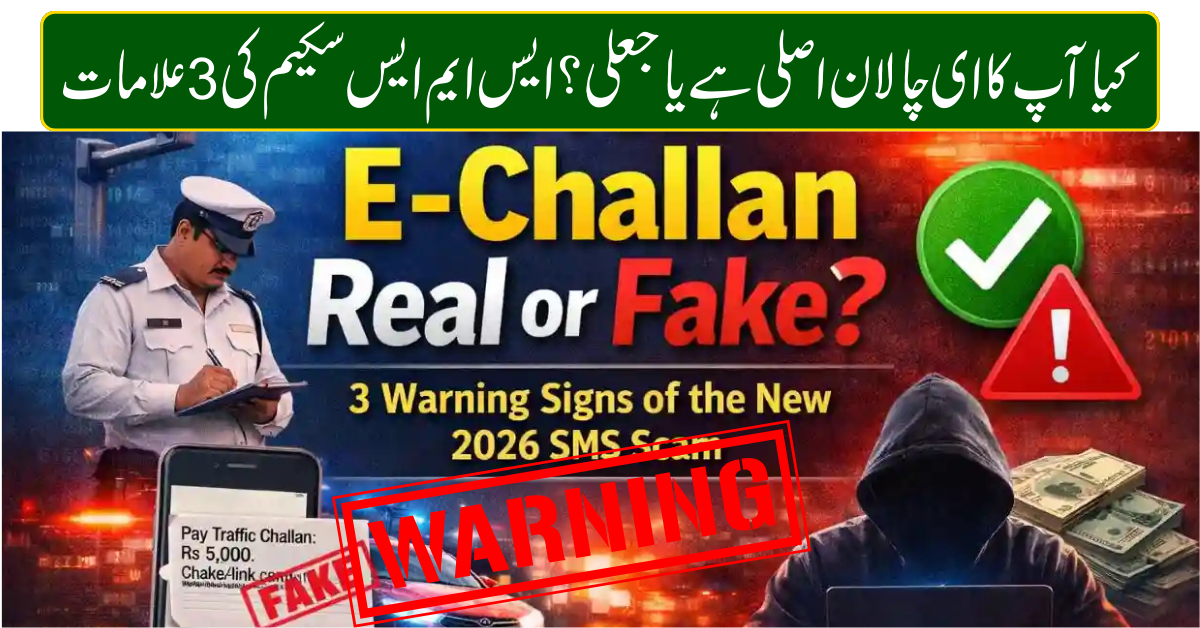
Digital traffic enforcement has made life easier for vehicle owners, but it has also created a new opportunity for cybercriminals. In 2026, thousands of people across Pakistan are receiving SMS messages claiming they have unpaid e-Challans, urging them to pay immediately.
Many of these messages look authentic. They use official-style wording, reference traffic police, and even mention realistic fine amounts. Unfortunately, a large number of these messages are part of a growing SMS scam designed to steal money, personal data, or banking access.
This in-depth guide explains how real e-Challans work, the three biggest warning signs of fake messages, and the safest way to verify and protect yourself.
What Is an E-Challan and How Does It Actually Work
An e-Challan is an electronic traffic fine issued through digital enforcement systems operated by traffic police and city authorities. Instead of paper tickets, violations are recorded electronically and stored in an official database.
Real e-Challans are generated through:
- Speed detection cameras
- Traffic signal violation cameras
- ANPR (Automatic Number Plate Recognition) systems
- Handheld devices used by traffic wardens
When a legitimate e-Challan is issued:
- It appears in the official traffic police system
- It can be checked using a government portal or mobile app
- Payment is accepted only through authorised platforms
Important to know:
Authorities do not demand immediate payment through random SMS links.
Why Fake E-Challan SMS Scams Are Rising in 2026
Several factors are driving the rapid increase in these scams:
- Most drivers expect digital notifications
- Online payments are now routine
- People fear penalties, license blocks, or legal trouble
- Scammers use AI tools to copy official language and layouts
Criminals rely on panic and urgency. The moment a driver believes they are in trouble, they are more likely to click without verifying.
3 Warning Signs of the New 2026 E-Challan SMS Scam
1) Suspicious or Shortened Payment Links
Fake messages almost always include a clickable link.
Common patterns:
- Shortened URLs (bit.ly, tinyurl, cutt.ly)
- Misspelt government-style domains
- Random letters and numbers
Red flag:
Government traffic departments do not send payment links through shortened URLs.
What scammers do:
- Create fake websites that look official
- Ask for CNIC, card number, expiry date, or OTP
- Drain your account instantly
Golden rule:
Always visit the official traffic police website manually. Never use SMS links.
2) Urgent or Threatening Language
Scam messages use fear tactics to push quick action:
- “Pay within 24 hours or the license will be blocked”
- “Final notice – court action will start today”
- “Vehicle registration will be cancelled”
Reality:
- Government notices are formal and non-threatening
- There is always a legal process and timeline
If an SMS creates panic, it is almost certainly fake.
3) Unverified Sender ID or Random Number
Fake e-Challan SMS often come from:
- Personal mobile numbers
- Foreign numbers
- Strange sender IDs like “CHLN-PAY” or “TRF-PK”
Official notifications usually come from:
- Registered government shortcodes
- Verified sender IDs used consistently
If the sender looks unusual or changes every time, do not trust it.
Common Examples of Fake E-Challan Messages
These are real-world patterns reported by users in 2026:
- “Your vehicle challan of Rs. 7,500 is pending. Pay now to avoid arrest.”
- “Traffic Police Notice: Click here to clear the fine today.”
- “Final chance to pay e-Challan before court case.”
All share three traits:
- Fear-based wording
- Suspicious link
- No official verification method
How to Check If Your E-Challan Is Real
Follow this safe verification method:
- Do not click the SMS link
- Open your browser and go to the official traffic police website
- Enter your vehicle registration number
- Check if any challan appears
- Pay only through official portals or authorised banking channels
If no challan shows in the system, the SMS is fake.
What to Do If You Clicked a Fake Link
Act quickly:
- Turn off mobile data or Wi-Fi
- Do not enter any information
- Run a full security scan on your phone
- Change passwords for banking and important apps
- Inform your bank immediately if details were entered
Fast action can stop further damage.
Can Fake E-Challan Links Install Malware?
Yes. Some scam links do more than steal money.
They can:
- Install hidden malware
- Track keystrokes
- Access saved passwords
- Spy on messages
That is why even clicking without paying can be dangerous.
How Authorities Are Responding in 2026
Government and cybercrime units are:
- Blocking fake domains
- Monitoring scam campaigns
- Issuing public awareness alerts
- Strengthening verification systems
Still, technology alone cannot stop scams. Public awareness is the strongest defence.
Smart Tips to Stay Safe
- Never trust urgent payment demands
- Always verify challans yourself
- Do not share OTPs, CNIC, or card details
- Install apps only from official app stores
- Teach family members about this scam
Conclusion
Fake e-Challan SMS scams in 2026 are more convincing than ever. Criminals exploit fear, urgency, and people’s trust in digital systems.
By recognising the three warning signs—suspicious links, threatening language, and unverified senders—you can avoid becoming a victim.
One simple rule saves you every time:
If something feels urgent and asks for payment through a link, stop and verify first.
Frequently Asked Questions
Can traffic police send e-Challan notifications by SMS?
Yes, but SMS is only for information. Payment is done through official platforms.
Will my license be blocked immediately for non-payment?
No. There is always a formal process.
Are WhatsApp e-Challan messages real?
No. Official challans are not sent through WhatsApp.
Is clicking a fake link dangerous even without paying?
Yes. It can install malware or steal data.
Where can I report fake e-Challan messages?
Report to cybercrime authorities and delete the message.