
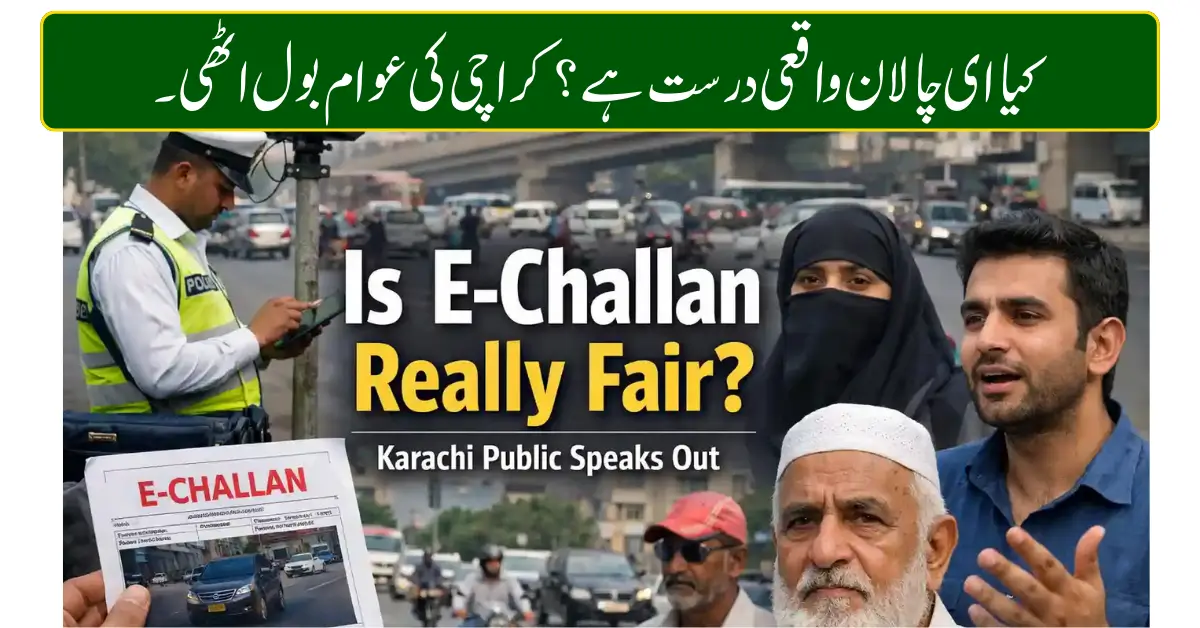
The electronic challan system was introduced as a symbol of modern traffic governance in Pakistan’s largest city. Powered by automated surveillance cameras, number plate recognition technology, and digital fine issuance, the initiative promised a future where traffic laws would be enforced without favouritism
, bribery, or human bias.
As Karachi moves through 2026, the debate has intensified. For some, E-Challan represents long-overdue discipline on chaotic roads. For others, it feels like a system that punishes citizens without understanding Karachi’s complex traffic realities. The question remains: is E-Challan truly fair, or does it need serious reform?
This article explores public sentiment, real-world challenges, measurable benefits, and the changes experts believe are essential for building trust.
What Is the E-Challan System in Karachi?
The E-Challan system is an electronic traffic enforcement mechanism operated through citywide surveillance infrastructure. Instead of traffic police stopping vehicles manually, cameras detect violations and generate fines automatically.
Key characteristics:
- Automated violation detection
- Digital challan generation
- CNIC and vehicle registration database integration
- Online challan checking and payment
Once a violation is recorded, the challan appears online and may also be sent to the registered owner.
Violations Commonly Captured by E-Challan Cameras
The system focuses on high-risk and frequent offenses, including:
- Over-speeding
- Red signal violation
- Illegal lane change
- Wrong-way driving
- Seatbelt non-compliance
- Helmet absence on motorcycles
Authorities state that these categories were selected based on accident data and road safety priorities.
Why the Government Introduced E-Challan
The original objectives behind launching the system included:
- Reducing roadside corruption
- Limiting human discretion in enforcement
- Improving road safety through deterrence
- Creating a data-driven traffic management model
- Aligning Karachi with smart city practices
In theory, automation was supposed to bring neutrality and consistency.
Public Reaction Across Karachi
A City Divided
Public opinion in Karachi is sharply split.
Some residents welcome stricter enforcement. Others feel targeted and unheard.
Common sentiments shared by citizens:
- “Challans appear even when I followed the rules.”
- “Notices arrive months after the incident.”
- “The car was sold, but I still get fined.”
These experiences have shaped a growing sense of frustration.
Accuracy Concerns and Camera Reliability
One of the most debated aspects of E-Challan is accuracy.
Reported issues include:
- Misread number plates
- Blurry or unclear images
- Wrong violation category
- Duplicate challans for the same incident
Technology is only as good as its calibration and maintenance. Without regular audits, small errors multiply into large public distrust.
Infrastructure vs Enforcement
The Fairness Gap
Karachi’s road infrastructure struggles with:
- Faded lane markings
- Broken traffic signals
- Poorly designed intersections
- Sudden road narrowing
Citizens argue that strict digital enforcement without fixing these structural problems creates an imbalance.
Many drivers feel they are being fined for navigating chaos rather than breaking rules intentionally.
E-Challan and Traditional Traffic Policing
Advantages of Digital Enforcement
- No roadside stops
- Reduced bribery opportunities
- Consistent application of rules
- Digital record keeping
Limitations Compared to Human Officers
- No chance to explain emergencies
- No on-the-spot warnings
- No situational judgment
- No immediate correction
A growing number of experts suggest a hybrid model combining automation with trained human oversight.
Is Revenue Becoming the Main Focus?
A widespread perception is that E-Challan has shifted from safety tool to revenue source.
Reasons behind this belief:
- Rapid expansion of camera coverage
- Limited public awareness campaigns
- Few warning notices for first-time violators
When education is absent, enforcement feels punitive rather than protective.
Understanding the Appeal and Complaint Process
Most Karachiites are unaware of:
- Where to file an appeal
- What documents are required
- How long resolution takes
- Whether hearings are digital or physical
This lack of clarity makes the system appear one-sided, even when legal appeal channels exist.
Impact on Daily Life
For many households, repeated challans mean:
- Unexpected expenses
- Monthly budget disruption
- Stress and anxiety
Commercial drivers, ride-hailing captains, and delivery riders report that fines directly affect their earning capacity.
Positive Changes Noted in Monitored Areas
Despite criticism, improvements are visible in some locations:
- Reduced red-light jumping
- Increased helmet usage
- More seatbelt compliance
- Slower average speeds
These indicators suggest that technology can influence behavior when applied correctly.
What Karachi Needs for a Fair E-Challan System
Experts, transport planners, and citizen groups commonly recommend:
- Clear road markings and functional signals
- Regular camera calibration and audits
- Warning notices for first-time offenders
- Fast and fully online appeal process
- Human review for disputed challans
- Public education campaigns
Fairness grows when enforcement is paired with facilitation.
The Future of E-Challan in Karachi
Digital enforcement is unlikely to disappear. Instead, it will expand.
The real question is whether it evolves into a citizen-centric system or remains a penalty-driven model.
Public trust will determine its long-term success.
Conclusion
The E-Challan system in Karachi represents technological progress, but technology alone does not guarantee justice.
A fair system requires:
- Accurate tools
- Transparent procedures
- Reliable infrastructure
- Respect for real-world conditions
Until these elements align, the debate over E-Challan’s fairness will continue across Karachi’s streets and screens.
FAQs
Is E-Challan legally valid in Karachi?
Yes, it operates under traffic laws and government regulations.
Can citizens challenge a wrong E-Challan?
Yes, through the official appeal mechanism.
Why do challans arrive late?
Due to processing delays and system backlogs.
Does E-Challan reduce corruption?
It reduces roadside bribery but introduces new accountability challenges.
Will the system improve in 2026?
Authorities have indicated upgrades, but meaningful reform depends on public pressure and policy action.