
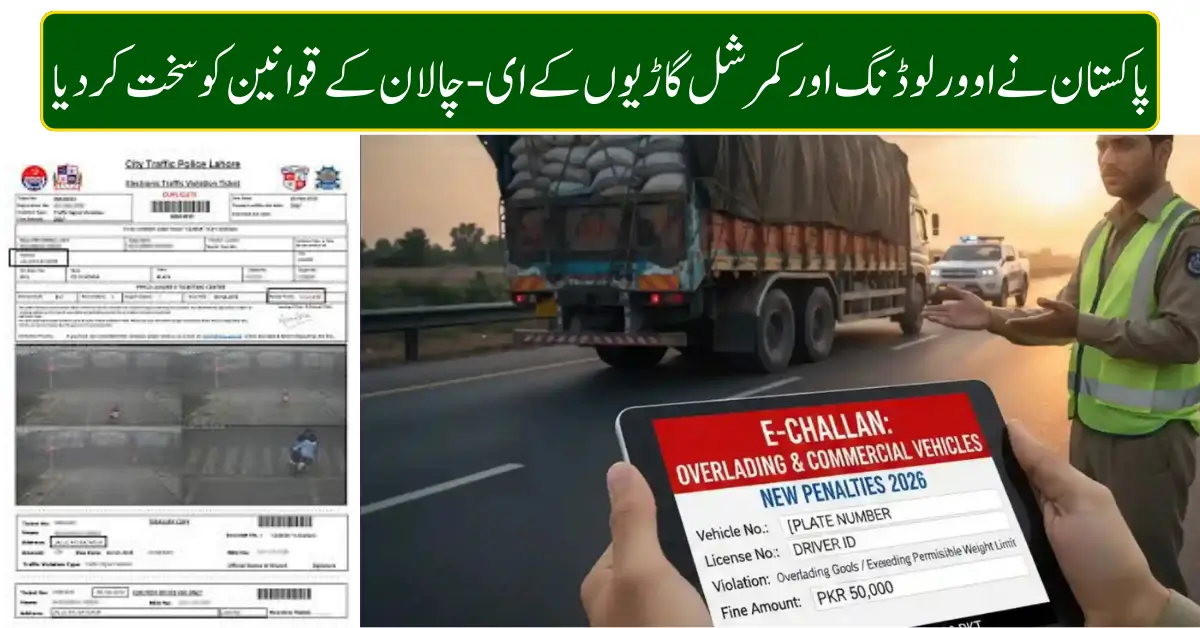
Pakistan has entered a new phase of digital traffic enforcement with stricter e-challan penalties for overloading and commercial vehicles in 2026. The updated framework is part of a nationwide effort to improve road safety, protect highways and bridges, and bring discipline to the transport sector through technology-driven monitoring.
Overloading has long been one of the biggest contributors to road accidents, infrastructure damage, and unfair competition in the logistics and passenger transport industry. With the new e-challan structure, authorities aim to ensure compliance through real-time detection, heavier fines, and stricter consequences.
What Is the E-Challan System in Pakistan?
An e-challan is a digitally generated traffic violation notice issued through automated and electronic enforcement methods instead of manual paper fines.
It is linked directly with:
- Vehicle registration records
- Owner’s CNIC
- Provincial transport authority databases
- Traffic police enforcement systems
Once issued, the challan becomes part of the national digital record, ensuring transparency and accountability.
Why Overloading Became a Priority in 2026
The decision to revise penalties was driven by multiple long-standing concerns.
Growing Accident Rate
Overloaded trucks and buses require longer braking distances and are harder to control, especially on motorways and hilly routes.
Severe Damage to Infrastructure
Engineering studies show that overloaded vehicles can reduce road and bridge lifespan by nearly half, leading to billions in repair costs.
Transport Sector Imbalance
Operators who overload vehicles reduce trips and costs, putting compliant transporters at a disadvantage.
Environmental Impact
Overloaded engines burn more fuel and emit higher carbon emissions, worsening air quality.
Commercial Vehicles Covered Under the New Rules
The 2026 e-challan penalties apply to nearly all commercial transport categories, including:
- Goods trucks (2-axle, 3-axle, multi-axle)
- Containers and long-haul trailers
- Passenger buses and coaches
- Oil tankers and hazardous material carriers
- Public transport vans
- Intercity and intra-city commercial vehicles
Private vehicles are not part of overloading penalties unless modified for commercial use.
Updated E-Challan Penalties for Overloading (2026)
Goods Vehicles: Trucks & Trailers
| Overloading Level | Penalty (2026) |
|---|---|
| Up to 10% overload | Rs. 10,000 |
| 10%–25% overload | Rs. 20,000 |
| Above 25% overload | Rs. 50,000 |
| Repeated violation | Rs. 100,000 + detention |
Vehicles exceeding limits repeatedly may be offloaded on the spot.
Passenger Transport Vehicles
Violations related to passenger overloading now attract stricter enforcement.
- Extra passengers beyond capacity: Rs. 5,000
- Standing passengers on highways: Rs. 10,000
- Unauthorised seating modification: Rs. 20,000
- Repeat offences: Route permit suspension
Axle Load & Structural Weight Violations
- Axle load breach: Rs. 15,000 per axle
- Bridge or flyover weight violation: Rs. 30,000
- Immediate unloading orders issued by authorities
Fitness & Documentation Violations
Commercial vehicles must also meet regulatory standards.
- Expired fitness certificate: Rs. 7,500
- Missing route permit: Rs. 10,000
- Non-commercial number plate usage: Rs. 5,000
How Overloading E-Challans Are Issued
Authorities now rely on a mix of automation and field enforcement.
Weigh Stations
Electronic weighbridges automatically record axle and gross vehicle weight.
Smart Surveillance Cameras
AI-enabled cameras identify overloaded vehicles using size, tilt, and suspension data.
Mobile Enforcement Units
Random roadside inspections are conducted using portable weighing systems.
Integrated Transport Databases
Vehicle permits, fitness status, and registration details are verified instantly.
How to Check E-Challan Status Online
Vehicle owners can check challans through:
- Provincial traffic police portals
- Official vehicle registration applications
- CNIC-linked SMS services
- Government-approved e-payment platforms
Payment Methods
- Online banking
- ATM transfer
- Mobile wallets
- Designated bank branches
Digital receipts are issued instantly after payment.
Consequences of Not Paying an E-Challan
Ignoring an e-challan can lead to serious legal and operational issues:
- Vehicle registration blockage
- Suspension of fitness certificate
- Route permit cancellation
- Blacklisting of a transport company
- Court notices for repeated defaulters
In some cases, vehicles may be seized until dues are cleared.
Impact on the Transport Industry
Positive Outcomes
- Safer highways
- Lower fatal accident rates
- Reduced road maintenance costs
- Fair competition among transporters
- Improved international compliance standards
Initial Challenges
- Increased compliance costs
- Need for better logistics planning
- Driver retraining requirements
Experts believe long-term benefits outweigh early adjustments.
How Transporters Can Stay Compliant in 2026
- Follow approved load limits strictly
- Weigh cargo at certified weighbridges
- Renew vehicle fitness certificates on time
- Keep permits and insurance valid
- Train drivers on updated penalties
- Avoid vehicle modifications
Preventive compliance is cheaper than repeated fines.
Role of Technology in the 2026 E-Challan Framework
The upgraded system includes:
- Automatic Number Plate Recognition (ANPR)
- AI-powered vehicle profiling
- Centralised challan databases
- Real-time violation alerts
- Cross-provincial data sharing
This reduces human error and limits enforcement loopholes.
What’s Next for E-Challan Enforcement in Pakistan
Authorities are planning further upgrades, including:
- A nationwide unified challan portal
- Mobile alerts before permit expiry
- Instant digital receipts
- Integration with vehicle insurance systems
- Smart motorway monitoring corridors
Conclusion
The E-Challan for Overloading & Commercial Vehicles – New Penalties 2026 reflects Pakistan’s serious commitment to safer roads, digital governance, and a regulated transport system. While penalties are tougher, they promote responsibility, protect public infrastructure, and create a level playing field for compliant operators.
Transporters who adapt early, follow legal limits, and embrace digital compliance will face fewer disruptions and long-term operational stability.
Frequently Asked Questions
What is the maximum fine for overloading in 2026?
Up to Rs. 100,000 for repeat or severe violations.
Can vehicles be stopped or detained?
Yes, in cases of excessive or repeated overloading.
Are e-challans issued automatically?
Yes, through cameras, weigh stations, and mobile units.
How can fines be paid?
Online banking, ATMs, mobile wallets, or authorised banks.
Do passenger buses fall under these rules?
Yes, passenger overloading is strictly penalized.