
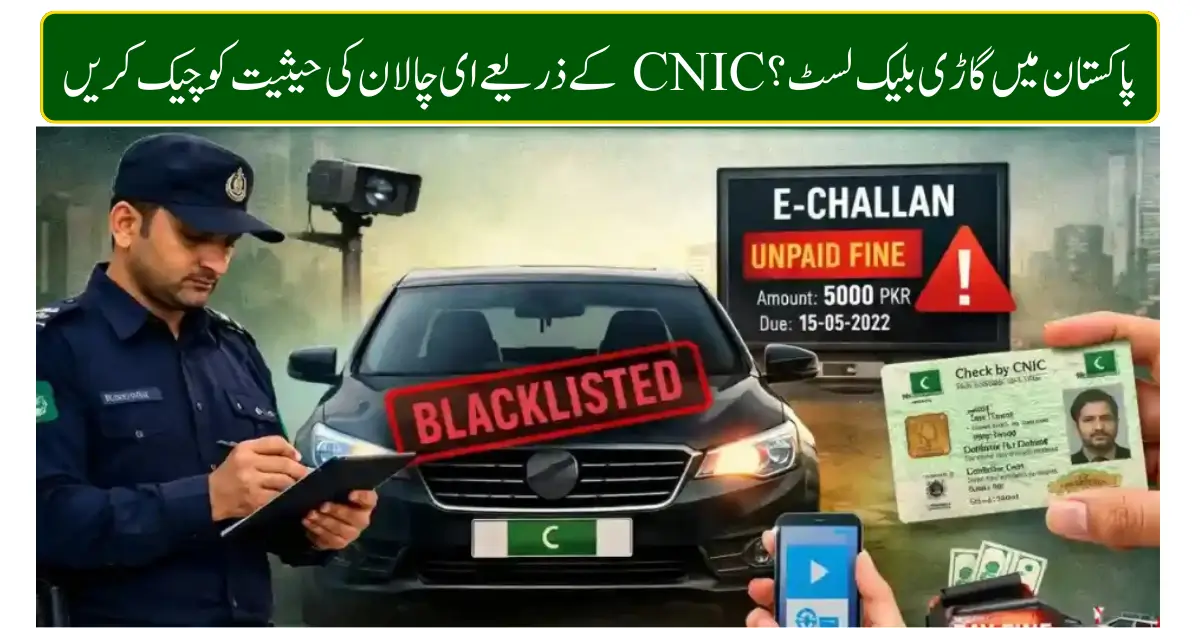
With Pakistan’s traffic enforcement systems becoming fully digital in 2026, vehicle owners are now under closer monitoring than ever before. Many drivers only realise there is an issue when they are stopped on the road, unable to pay the token tax, or face problems during vehicle transfer. One of the most common reasons behind these issues is unpaid e-challans, leading to vehicle blacklisting.
This detailed guide explains what vehicle blacklisting means, how the e-challan system works, and the latest methods to check e-challan status by CNIC so you can avoid fines, penalties, and legal trouble.
What Does Vehicle Blacklisting Mean in Pakistan?
A blacklisted vehicle has violated traffic laws and failed to clear fines within the allowed time. Once blacklisted, the vehicle is flagged in official traffic and excise department systems.
If your vehicle is blacklisted, you may face:
- Restrictions on vehicle transfer
- Blocked token tax payment
- Issues with registration renewal
- On-road penalties during traffic checks
- Possible vehicle impoundment
The purpose of blacklisting is to enforce compliance and ensure traffic fines are paid on time.
Why Vehicles Get Blacklisted – Common Reasons
Understanding the causes helps you prevent problems before they start.
Unpaid E-Challans
Multiple unpaid traffic fines are the most common reason for blacklisting.
Repeated Traffic Violations
Frequent overspeeding, signal breaking, lane violations, or illegal parking can trigger enforcement actions.
Fake or Fancy Number Plates
Vehicles using altered, fancy, or unregistered number plates are often blacklisted immediately.
Incomplete or Outdated Registration
Expired registration, missing documents, or mismatched records increase the risk.
What Is an E-Challan and How Does It Work?
An e-challan is a digital traffic fine issued through:
- Safe City cameras
- ANPR (Automatic Number Plate Recognition) systems
- Traffic police handheld devices
Each challan includes:
- Vehicle registration number
- Nature of violation
- Date, time, and location
- Photo or video evidence
The challan is then uploaded to the central system and linked to the vehicle—and often the owner’s CNIC.
Can You Check E-Challan Status by CNIC in 2026?
Yes. In 2026, CNIC-based checking has become more common, especially when your CNIC is linked to the vehicle registration.
CNIC checking is useful when:
- You own multiple vehicles
- You forgot the vehicle number
- You want a combined record of violations
- You recently sold or bought a vehicle
How to Check E-Challan Status by CNIC – Step-by-Step
Method 1: Official E-Challan Portals
Most provincial traffic departments allow CNIC-based searches.
Steps:
- Open the official traffic or e-challan portal
- Select CNIC as the search option
- Enter your 13-digit CNIC number
- Submit the request
- View pending, paid, or disputed challans
Method 2: Check by Vehicle Registration Number
If the CNIC search is not available:
- Enter your vehicle number
- Complete captcha verification
- View the challan history and payment status
This method is widely supported across provinces.
Method 3: Mobile Apps or SMS Services
Some regions offer:
- Official traffic police mobile apps
- SMS alerts for issued challans
- Push notifications for unpaid fines
These services help drivers stay informed in real time.
How to Confirm If Your Vehicle Is Blacklisted
After checking your challan record, your vehicle may be blacklisted if you see:
- “Blacklisted” or “Blocked” status
- Token tax payment restriction
- Registration service denial
- Warnings during traffic checks
If any of these appear, immediate action is required.
What Happens If You Drive a Blacklisted Vehicle?
Driving a blacklisted vehicle in 2026 can result in serious consequences:
- Heavy on-the-spot fines
- Vehicle impoundment
- Court notices or legal proceedings
- Additional penalties added to existing challans
Clearing dues before driving is the safest option.
How to Pay E-Challan After Checking by CNIC
Once unpaid challans are identified, payments can usually be made through:
- Online banking apps
- ATM services
- Mobile wallets
- Designated bank branches
- Traffic police facilitation centres
Always keep the payment receipt or digital confirmation.
Can a Blacklisted Vehicle Be Un-Blacklisted?
Yes. Blacklisting is reversible once dues are cleared.
Steps to remove blacklisting:
- Pay all pending challans
- Wait for system update (usually 24–72 hours)
- Recheck status via portal or app
- Contact the traffic helpline if the status remains unchanged
Some cases may require manual verification.
Tips to Avoid Vehicle Blacklisting
Following a few simple habits can save you major trouble:
- Check e-challan status regularly
- Pay fines before deadlines
- Follow traffic rules strictly
- Keep the token tax and registration updated
- Avoid fake or non-standard number plates
Prevention is easier than resolution.
Why CNIC-Based E-Challan Checking Matters
CNIC-linked checking helps:
- Track all vehicles under one owner
- Identify forgotten or hidden challans
- Prevent surprise penalties
- Ensure compliance with traffic laws
This is especially helpful for families and businesses managing multiple vehicles.
Future of E-Challan & Vehicle Monitoring in Pakistan
By 2026, traffic enforcement is moving toward:
- AI-powered surveillance
- Fully automated challan issuance
- Centralised CNIC-vehicle databases
- Faster online dispute resolution
- Nationwide data sharing between departments
Ignoring challans is no longer an option.
Frequently Asked Questions
Can I check e-challans using someone else’s CNIC?
No. CNIC-based access is usually restricted to the registered owner.
How long does un-blacklisting take after payment?
Typically 1–3 working days.
Is CNIC mandatory for e-challan checks?
No, but it provides a broader record than vehicle number alone.
What if I sold the vehicle, but the challans are still linked to me?
Update ownership records immediately to avoid liability.
Can incorrect e-challans be disputed?
Yes. Most systems allow disputes online or at traffic offices with evidence.
Final Words
In 2026, checking your e-challan status by CNIC is no longer optional—it is essential. With strict digital enforcement and centralised vehicle records, unpaid fines can quickly lead to vehicle blacklisting, financial loss, and legal trouble. Regular checks, timely payments, and responsible driving ensure peace of mind and smooth vehicle ownership.